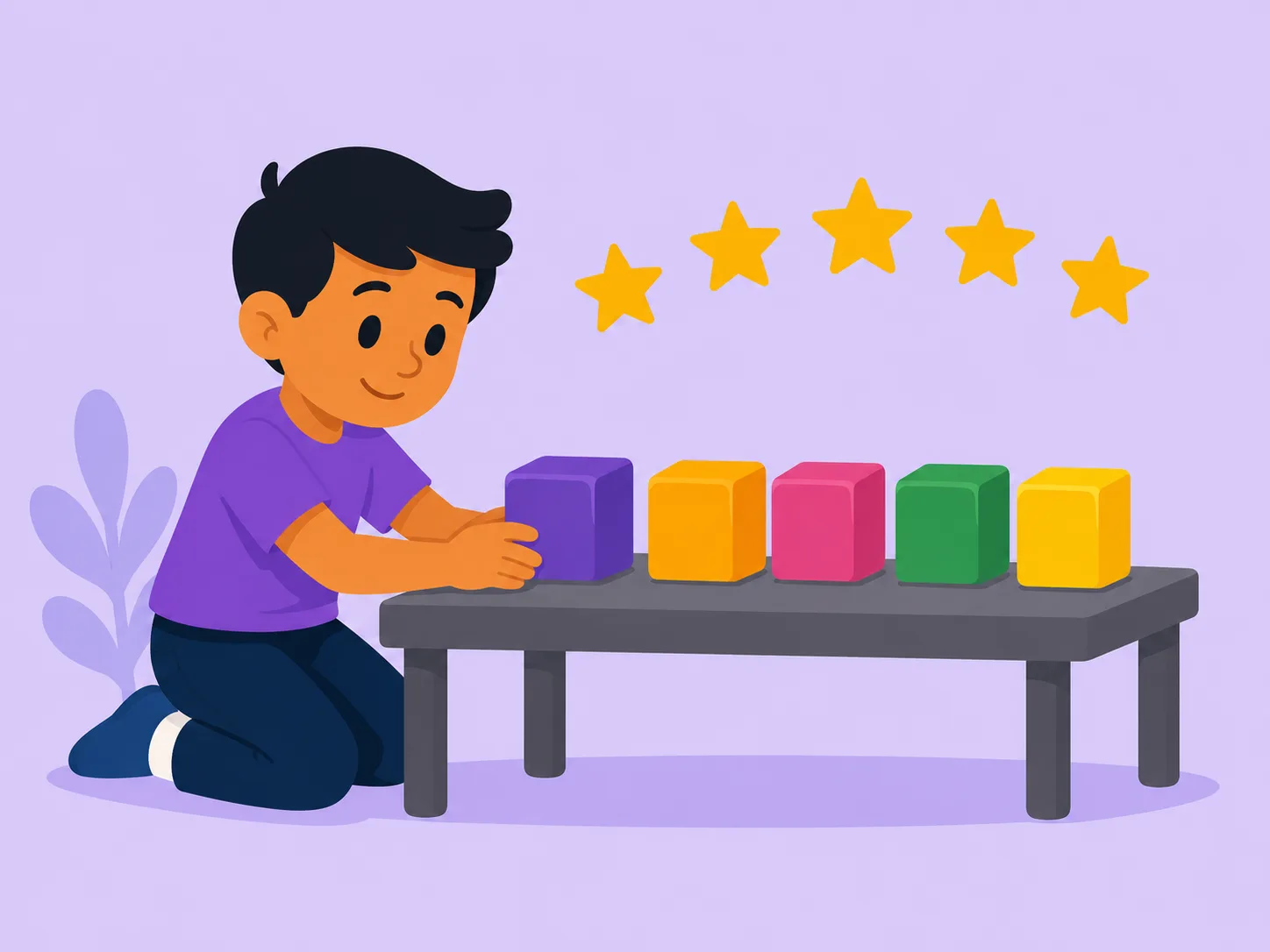
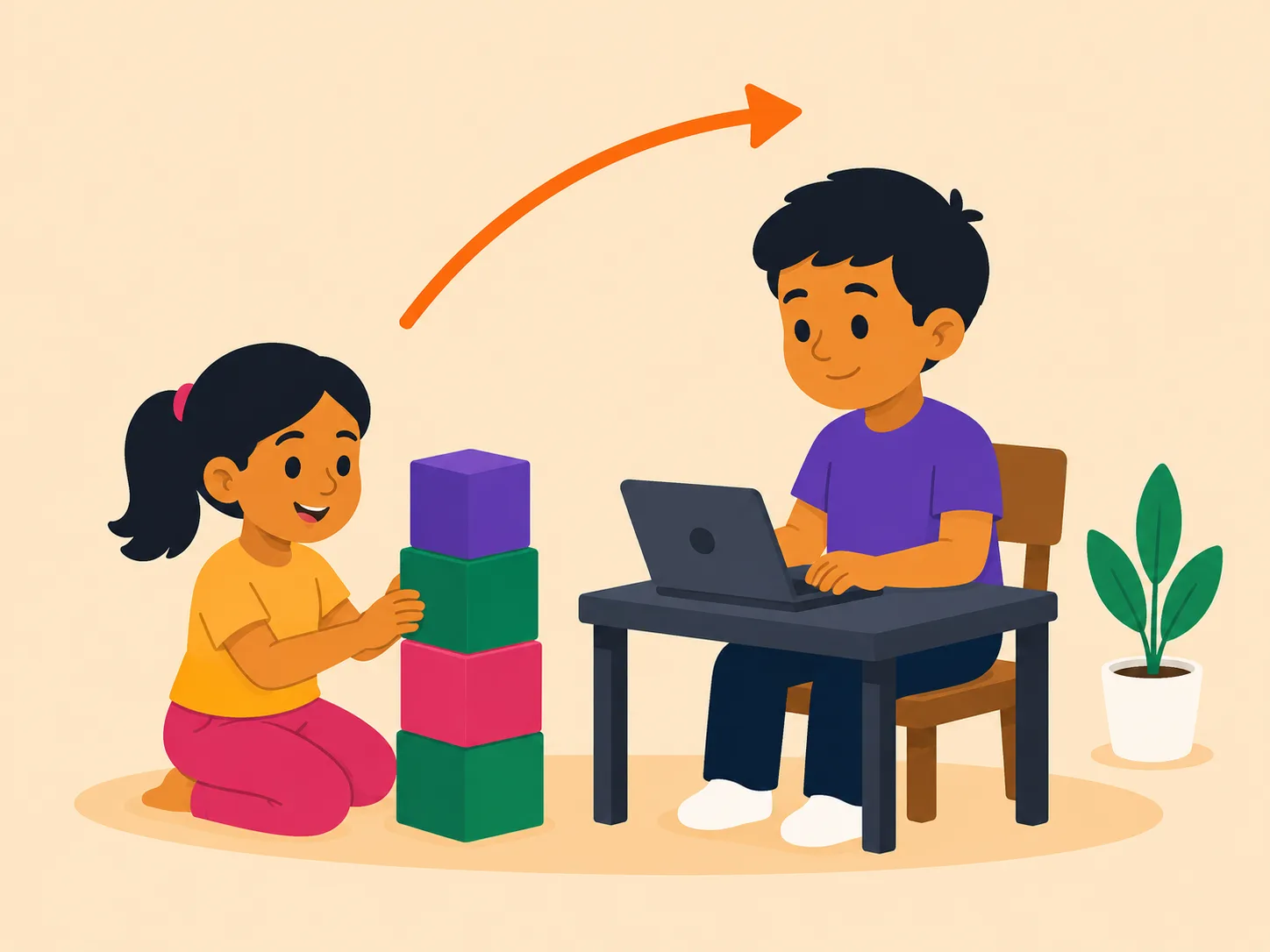
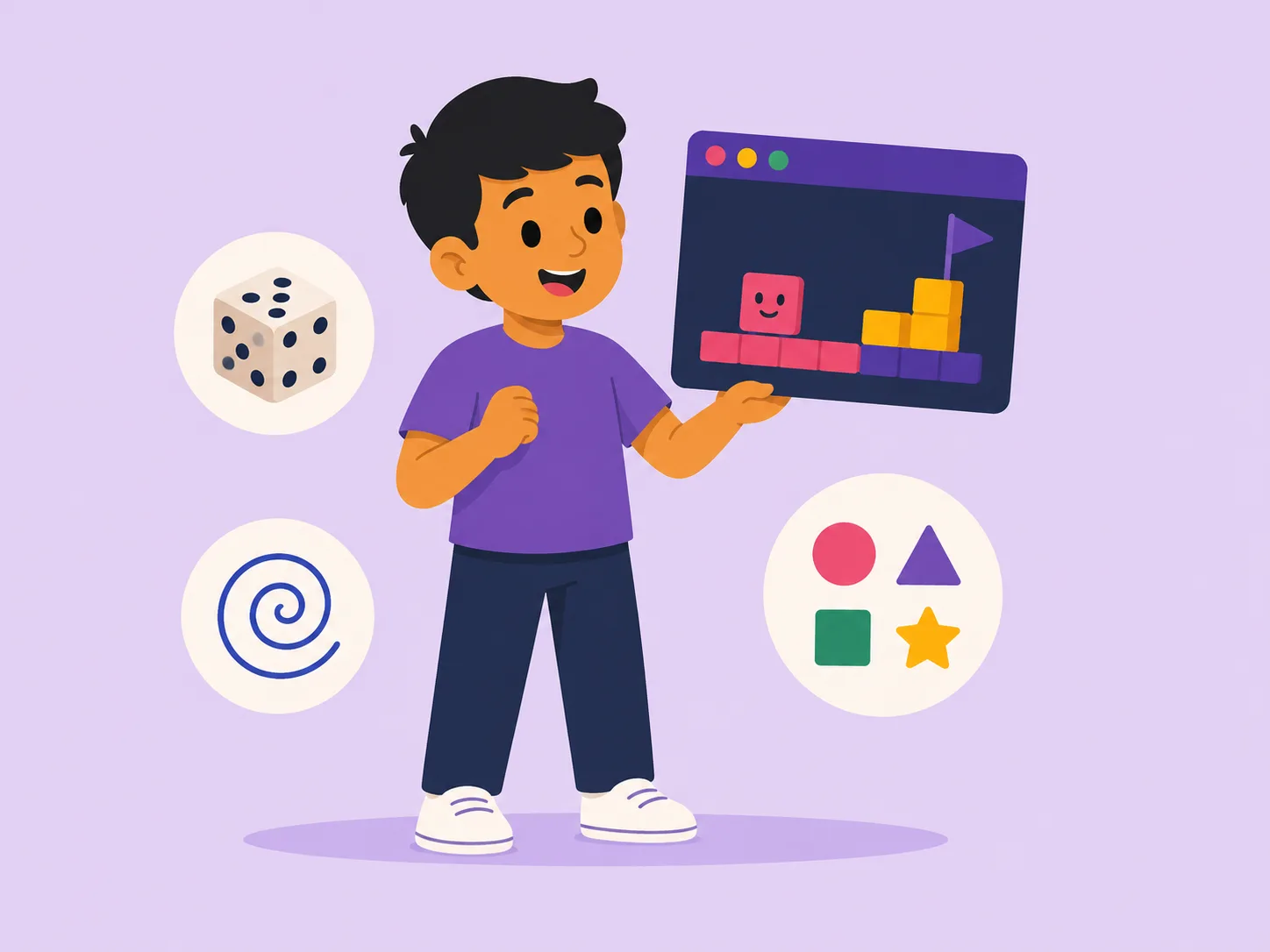
7 Signs Your Child Is Ready to Move Beyond Blocks
Seven things you can watch for at home, none of them about being clever. Plus the case for staying exactly where you are a while longer.
In this article
A father asked us a while back whether his daughter was being held back. She had been in a Scratch class for a year, she loved it, and he had started to worry that loving it was the problem.
It was a good question asked slightly the wrong way round. The thing to look for is not whether a child has stopped enjoying blocks. It is whether the tool has started getting in the way of what they are trying to say.
Those are different, and the second one is visible from your kitchen without asking a single question.
Here are seven things to watch for, why each one means something, and the case for doing nothing at all.
First, what this is not
None of the seven signs is a claim about how bright your child is. That matters, because most lists like this quietly turn into an aptitude test and then parents start reading them as a verdict.
Nothing here measures ability. Every item is something a child does when a tool has become comfortable enough to be annoying, which happens to everyone who gets good at anything and has nothing to do with talent.
It also is not a race. A child who moves across at eleven and a child who moves at nine end up in the same place, and the one who waited usually arrives with steadier logic. There is no prize for early.
And it is not an exit. Plenty of our students keep a Scratch project running for months after they start typing, because some things are genuinely faster to build in blocks and always will be. Nobody hands the bike back when they learn to drive.
Signs in how they talk about it
The first three show up in conversation, usually at dinner, usually when nobody asked.
Sign one: they explain a project in steps without being prompted. "First it checks if you touched the wall, then it takes a life off, then it puts you back at the start." That sentence has sequence, condition and consequence in it. A child who narrates in that order is thinking in a way that text will not disturb.
Sign two: they have started finding blocks by name rather than by colour. Early on, children navigate Scratch visually. They reach for the blue one. When your child starts saying "where's the one that says forever", they have moved from recognising shapes to reading labels, which is the exact skill typing demands.
Sign three: they ask what something is really called. A child who asks whether a repeat block is "the same as a loop, like in proper coding" has noticed that there is a bigger vocabulary out there and wants in. That curiosity is worth more than any amount of readiness on paper.
Signs in what they build
The next two are visible on screen, and you do not need to understand what you are looking at.
Sign four: they grumble about copying. Watch for the moment your child duplicates the same stack of blocks for the fourth time and complains about it. Irritation with repetition is the single most reliable signal on this list, because it means they have understood that a computer should be doing this for them and their tool is not letting them say so.
Sign five: they can watch typed code without flinching. If a sibling or a video shows real code on screen and your child leans in rather than glazing over, the text has stopped looking like a wall. A year earlier the same screen would have closed the conversation.
This is the sign four ceiling in Python, and it is worth seeing what the annoyance is actually asking for:
friends = ["Appu", "Meera", "Zain", "Riya", "Nikhil"]

for name in friends:
    print("Hi " + name + "!")
Signs in what they want next
The last two are about audience, and they are the ones parents most often miss because they do not look like coding at all.
Sign six: they want to send it to somebody who is not in the room. "Can Appu play this?" is a bigger moment than it sounds. Wanting an audience outside the house is the beginning of caring whether a thing actually works, which is most of what separates a hobby from a skill.
Sign seven: they start a project without opening the tutorial first. This is the quiet one. A child who opens a blank project and begins has stopped needing a path laid out, and that self-direction survives the move to typing far better than any specific knowledge does.
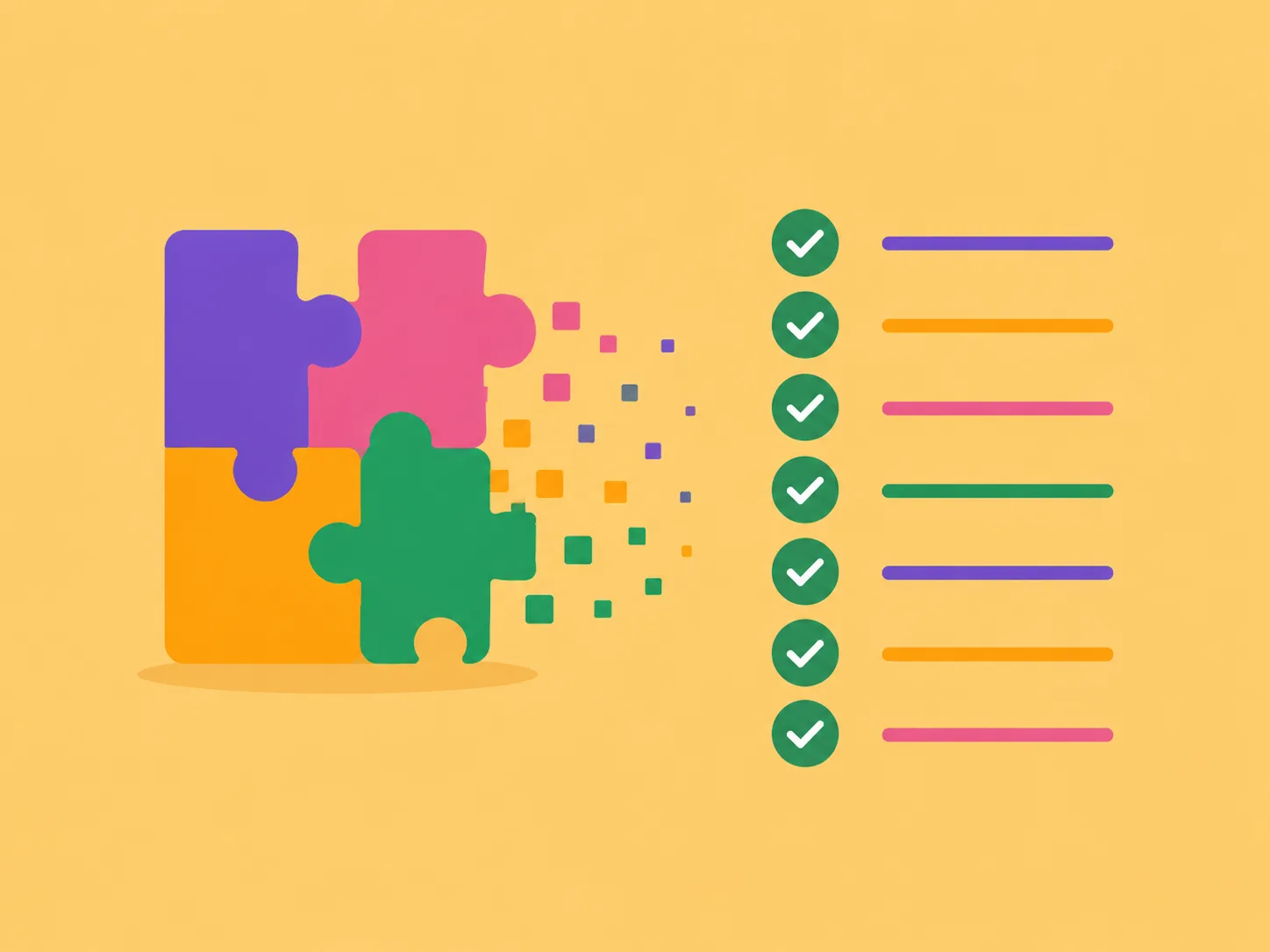
Here they are together, in a form you can screenshot and come back to in a month, which is roughly the right interval.
The signal is not that your child loves blocks less. It is that the blocks have started getting in the way of what they want to say.
What you can do this week
If you counted three or fewer, the honest recommendation is to change nothing. Waiting costs almost nothing and moving early costs quite a lot, which we went through in when a child is ready to move from Scratch to Python.
If you counted four or more, none of these three requires committing to anything.
- Count the signs honestly this week, including the ones you have not seen. The empty boxes are the useful half.
- Ask your child to rebuild an old blocks project from scratch and watch whether the repetition annoys them this time.
- Show them ten lines of real code on a screen and say nothing. Watch whether they lean in or look away.
Final thought
That father counted two. We told him to leave it alone and ask again in a few months, which is not the answer people expect from somebody who could have sold him a Python course that afternoon.
He counted five the next time we spoke. His daughter had started complaining about duplicating scripts, which is the sign that matters most, and she moved across without any of the friction that catches children who are pushed early.
If you want to know what the first typed lesson is actually like before deciding, we wrote it up minute by minute in what does a first coding class actually look like. And if you are still not sure your child is making progress at all, the markers are in how do I know my child is actually learning to code.
And if your child wants the case for all of this in their own words rather than yours, send them coding isn't dying.
Or bring them to a free trial class and let us count with you. We will tell you honestly if the answer is not yet, because a child who moves too early usually comes back to us a year later having decided they are bad at this. One hour, no card needed.